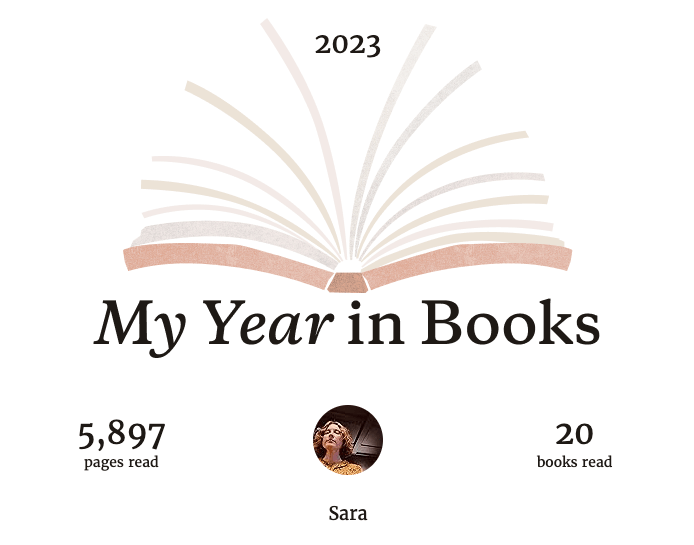
I met my Goodreads goal this year (pats self on back). And it’s still three days before the deadline.* I mean, New Years.
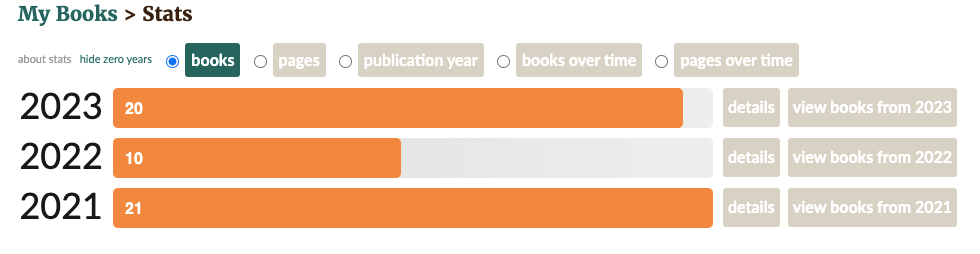
I’ve participated in the challenge before (and I’ll say more about that below), but this year I noticed a new pattern in my reading. I re-read several books. That is, I re-read books I read years ago. But this year I also re-read a few books right after I finished them.
Though I could count these books in my challenge (and Goodreads says I can), I didn’t. For convoluted reasons, there’s no simple “re-read” button on Goodreads. Thanks, Amazon, for not improving the site in this way. The part of me that enjoys Goodreads analytics and graphics wants to see a measure of my re-reads because they are different from first-reads. But at the end of the day, the Reading Challenge is ancillary to my re-reading practice.
- My Name Is Red, by Orhan Pamuk (translated by Erdağ M. Göknar). I read this book for the first time in college, and, I’m sure, didn’t understand most of it. (Though based on what I underlined then, I at least keyed into the right parts.) At first, I picked up My Name Is Red, because I wanted to read something from my past as a way to connect with what I was up to 15 years ago during my first year of college. But this book had so much more to offer than a small window into my youth. It’s a richly woven murder mystery that both theorizes and challenges historical (it’s set in 16th century Istanbul) and contemporary aesthetic ideals and practices. A win for this re-reader.
- The Time of Contempt, (Witcher #2) by Andrzej Sapkowski (translated by David French). I started reading this series after watching the Netflix series (skip Season 2, it’s terrible). War comes to the world and Geralt, Yennefer, and Ciri are all are separated from each other at different times. The world’s rulers are inept and the common folk don’t care about them anyway. Life goes on during war, which wages near and far. Some of my favorite characters in the Witcher series appear in this book: Dandelion, Codringher and Fenn, Tissaia de Vries, Little Horse, and the Rats. Sapkowski is very skilled at writing political intrigue and weaving cinematic scenes together, which is why I keep coming back to these books.
- The Dragon Reborn (Wheel of Time #3) by Robert Jordan. Yes, another fantasy novel in a long series. I listened to this one, though. Rosamund Pike’s narration carried me through the 26 hours of listening, twice. I haven’t read all of the Wheel of Time series, but I can say so far that I like this one the best. Rand is barely present, thank the light, so the other characters get to shine. We get to watch Mat, Perrin, Egwene, and Nyneve grow and take their own paths, even if all paths lead back to Rand. The gender binarism in this series is sometimes insufferable (and one of the major improvements the TV series made), but less so in this book.
The one thing all three books have in common is that they are set in the middle of dramatic world-change. In My Name is Red, political change is inseparable from aesthetic change. And in the two fantasy novels, the narrative is stuck in the messy middle: a time with maximum conflict and minimum resolution. My favorite! (Maybe I’ll write more about this narrative condition in the future.)
In all cases, it was pleasurable to return to a narrative I knew and wanted to get to know better. In a re-reading I could savor the details without worrying about the narrative sweeping me away. I knew where we were going.
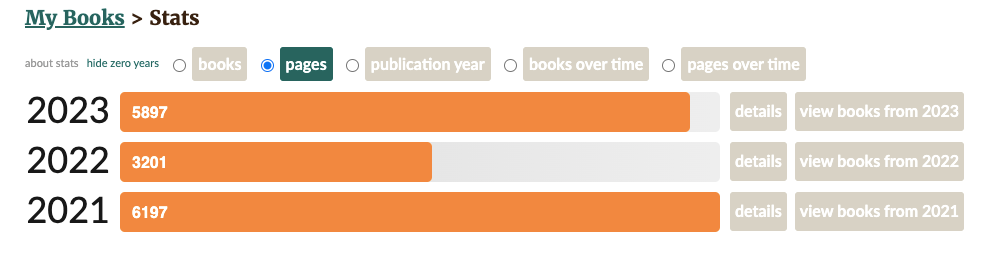
I think it’s cool that people track their reading on Goodreads. It’s a practice some academics call “social reading” and there are more places to do it than an Amazon affiliate.
This year there were almost 8 million participants in the yearly challenge.

Why people participate in Goodreads is a bit of a mystery. The Reading Challenge itself is also mysterious. Plenty of people are confused by it, as the many Reddit threads suggest. Here, folks question how and why people read upwards of 100 books a year, and then debate whether people should read for enjoyment or because there’s some “gamified” reward at the end. (Hey, pleasure takes many forms).
No matter if I theorize my choice or question what kind of data I’m feeding the Amazon beast, I’ll still participate next year.
Notes:
*I say “deadline” with a slight nod to this Atlantic headline, “The Adults Who Treat Reading Like Homework.” Alas, the essay is behind a paywall, so I can’t say more.
**Some digital humanities scholars use Goodreads as a dataset to try to understand reading communities and reading practices. Here’s one example, and another. (Hey, I said the digital humanities were ascendent, didn’t I!)
 Sara Gabler